513.找树左下角的值
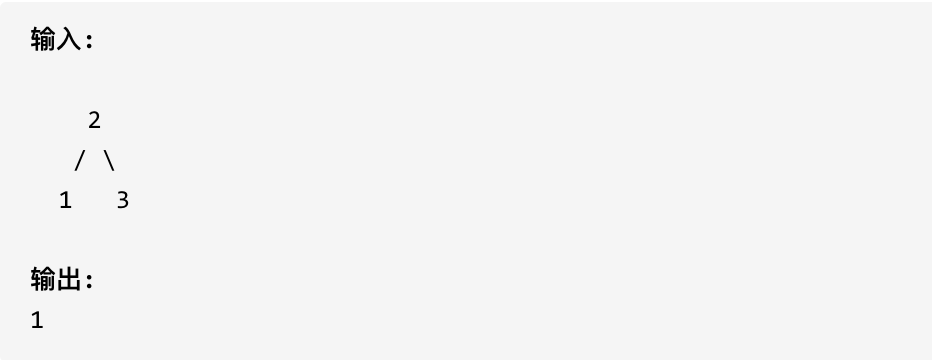
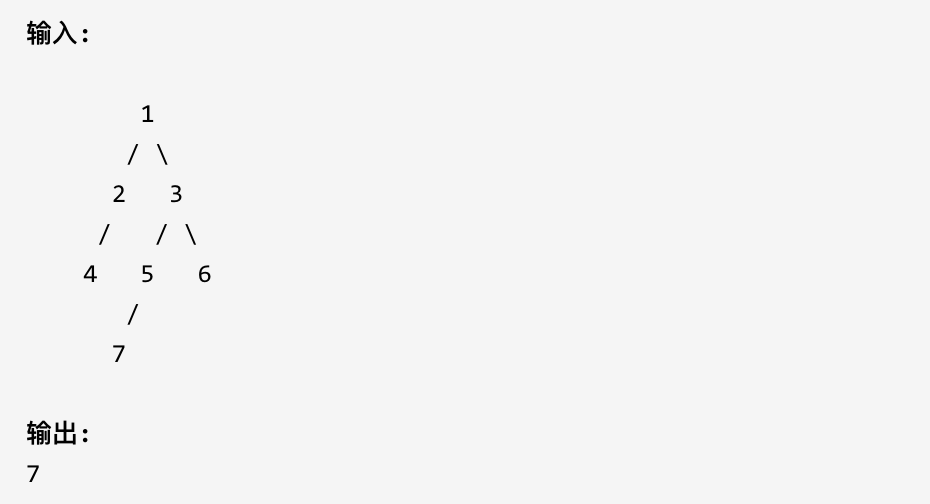
给定一个二叉树,在树的最后一行找到最左边的值。
示例 1:
示例 2:
思路
本题要找出树的最后一行的最左边的值。此时大家应该想起用层序遍历是非常简单的了,反而用递归的话会比较难一点。
我们依然还是先介绍递归法。
递归
咋眼一看,这道题目用递归的话就就一直向左遍历,最后一个就是答案呗?
没有这么简单,一直向左遍历到最后一个,它未必是最后一行啊。
我们来分析一下题目:在树的最后一行找到最左边的值。
首先要是最后一行,然后是最左边的值。
如果使用递归法,如何判断是最后一行呢,其实就是深度最大的叶子节点一定是最后一行。
如果对二叉树深度和高度还有点疑惑的话,请看:110.平衡二叉树。
所以要找深度最大的叶子节点。
那么如何找最左边的呢?可以使用前序遍历(当然中序,后序都可以,因为本题没有 中间节点的处理逻辑,只要左优先就行),保证优先左边搜索,然后记录深度最大的叶子节点,此时就是树的最后一行最左边的值。
递归三部曲:
- 确定递归函数的参数和返回值
参数必须有要遍历的树的根节点,还有就是一个int型的变量用来记录最长深度。 这里就不需要返回值了,所以递归函数的返回类型为void。
本题还需要类里的两个全局变量,maxDepth用来记录最大深度,result记录最大深度最左节点的数值。
代码如下:
int maxDepth = INT_MIN;   // 全局变量 记录最大深度
int result;       // 全局变量 最大深度最左节点的数值
void traversal(TreeNode* root, int depth)
- 确定终止条件
当遇到叶子节点的时候,就需要统计一下最大的深度了,所以需要遇到叶子节点来更新最大深度。
代码如下:
if (root->left == NULL && root->right == NULL) {
    if (depth > maxDepth) {
        maxDepth = depth;           // 更新最大深度
        result = root->val;   // 最大深度最左面的数值
    }
    return;
}
- 确定单层递归的逻辑
在找最大深度的时候,递归的过程中依然要使用回溯,代码如下:
                    // 中
if (root->left) {   // 左
    depth++; // 深度加一
    traversal(root->left, depth);
    depth--; // 回溯,深度减一
}
if (root->right) { // 右
    depth++; // 深度加一
    traversal(root->right, depth);
    depth--; // 回溯,深度减一
}
return;
完整代码如下:
class Solution {
public:
    int maxDepth = INT_MIN;
    int result;
    void traversal(TreeNode* root, int depth) {
        if (root->left == NULL && root->right == NULL) {
            if (depth > maxDepth) {
                maxDepth = depth;
                result = root->val;
            }
            return;
        }
        if (root->left) {
            depth++;
            traversal(root->left, depth);
            depth--; // 回溯
        }
        if (root->right) {
            depth++;
            traversal(root->right, depth);
            depth--; // 回溯
        }
        return;
    }
    int findBottomLeftValue(TreeNode* root) {
        traversal(root, 0);
        return result;
    }
};
当然回溯的地方可以精简,精简代码如下:
class Solution {
public:
    int maxDepth = INT_MIN;
    int result;
    void traversal(TreeNode* root, int depth) {
        if (root->left == NULL && root->right == NULL) {
            if (depth > maxDepth) {
                maxDepth = depth;
                result = root->val;
            }
            return;
        }
        if (root->left) {
            traversal(root->left, depth + 1); // 隐藏着回溯
        }
        if (root->right) {
            traversal(root->right, depth + 1); // 隐藏着回溯
        }
        return;
    }
    int findBottomLeftValue(TreeNode* root) {
        traversal(root, 0);
        return result;
    }
};
如果对回溯部分精简的代码 不理解的话,可以看这篇257. 二叉树的所有路径
迭代法
本题使用层序遍历再合适不过了,比递归要好理解得多!
只需要记录最后一行第一个节点的数值就可以了。
如果对层序遍历不了解,看这篇二叉树:层序遍历登场!,这篇里也给出了层序遍历的模板,稍作修改就一过刷了这道题了。
代码如下:
class Solution {
public:
    int findBottomLeftValue(TreeNode* root) {
        queue<TreeNode*> que;
        if (root != NULL) que.push(root);
        int result = 0;
        while (!que.empty()) {
            int size = que.size();
            for (int i = 0; i < size; i++) {
                TreeNode* node = que.front();
                que.pop();
                if (i == 0) result = node->val; // 记录最后一行第一个元素
                if (node->left) que.push(node->left);
                if (node->right) que.push(node->right);
            }
        }
        return result;
    }
};
总结
本题涉及如下几点:
-
递归求深度的写法,我们在
中详细的分析了深度应该怎么求,高度应该怎么求。
-
递归中其实隐藏了回溯,在
中讲解了究竟哪里使用了回溯,哪里隐藏了回溯。
-
层次遍历,在
深度讲解了二叉树层次遍历。 所以本题涉及到的点,我们之前都讲解过,这些知识点需要同学们灵活运用,这样就举一反三了。
其他语言版本
- Java
- Python
- Go
- JavaScript
- TypeScript
- Swift
- Scala
- Rust
- C#
// 递归法
class Solution {
    private int Deep = -1;
    private int value = 0;
    public int findBottomLeftValue(TreeNode root) {
        value = root.val;
        findLeftValue(root,0);
        return value;
    }

    private void findLeftValue (TreeNode root,int deep) {
        if (root == null) return;
        if (root.left == null && root.right == null) {
            if (deep > Deep) {
                value = root.val;
                Deep = deep;
            }
        }
        if (root.left != null) findLeftValue(root.left,deep + 1);
        if (root.right != null) findLeftValue(root.right,deep + 1);
    }
}
//迭代法
class Solution {

    public int findBottomLeftValue(TreeNode root) {
        Queue<TreeNode> queue = new LinkedList<>();
        queue.offer(root);
        int res = 0;
        while (!queue.isEmpty()) {
            int size = queue.size();
            for (int i = 0; i < size; i++) {
                TreeNode poll = queue.poll();
                if (i == 0) {
                    res = poll.val;
                }
                if (poll.left != null) {
                    queue.offer(poll.left);
                }
                if (poll.right != null) {
                    queue.offer(poll.right);
                }
            }
        }
        return res;
    }
}
(版本一)递归法 + 回溯
class Solution:
    def findBottomLeftValue(self, root: TreeNode) -> int:
        self.max_depth = float('-inf')
        self.result = None
        self.traversal(root, 0)
        return self.result

    def traversal(self, node, depth):
        if not node.left and not node.right:
            if depth > self.max_depth:
                self.max_depth = depth
                self.result = node.val
            return

        if node.left:
            depth += 1
            self.traversal(node.left, depth)
            depth -= 1
        if node.right:
            depth += 1
            self.traversal(node.right, depth)
            depth -= 1
(版本二)递归法+精简
class Solution:
    def findBottomLeftValue(self, root: TreeNode) -> int:
        self.max_depth = float('-inf')
        self.result = None
        self.traversal(root, 0)
        return self.result

    def traversal(self, node, depth):
        if not node.left and not node.right:
            if depth > self.max_depth:
                self.max_depth = depth
                self.result = node.val
            return

        if node.left:
            self.traversal(node.left, depth+1)
        if node.right:
            self.traversal(node.right, depth+1)
(版本三) 迭代法
# Definition for a binary tree node.
# class TreeNode:
#     def __init__(self, val=0, left=None, right=None):
#         self.val = val
#         self.left = left
#         self.right = right
from collections import deque
class Solution:
    def findBottomLeftValue(self, root):
        if root is None:
            return 0
        queue = deque()
        queue.append(root)
        result = 0
        while queue:
            size = len(queue)
            for i in range(size):
                node = queue.popleft()
                if i == 0:
                    result = node.val
                if node.left:
                    queue.append(node.left)
                if node.right:
                    queue.append(node.right)
        return result
递归法:
var depth int   // 全局变量 最大深度
var res int     // 记录最终结果
func findBottomLeftValue(root *TreeNode) int {
    depth, res = 0, 0   // 初始化
    dfs(root, 1)
    return res
}

func dfs(root *TreeNode, d int) {
    if root == nil {
        return
    }
    // 因为先遍历左边,所以左边如果有值,右边的同层不会更新结果
    if root.Left == nil && root.Right == nil && depth < d {
        depth = d
        res = root.Val
    }
    dfs(root.Left, d+1)   // 隐藏回溯
    dfs(root.Right, d+1)
}
迭代法:
func findBottomLeftValue(root *TreeNode) int {
    var gradation int
    queue := list.New()

    queue.PushBack(root)
    for queue.Len() > 0 {
        length := queue.Len()
        for i := 0; i < length; i++ {
            node := queue.Remove(queue.Front()).(*TreeNode)
            if i == 0 {
                gradation = node.Val
            }
            if node.Left != nil {
                queue.PushBack(node.Left)
            }
            if node.Right != nil {
                queue.PushBack(node.Right)
            }
        }
    }
    return gradation
}
递归版本:
var findBottomLeftValue = function(root) {
    //首先考虑递归遍历 前序遍历 找到最大深度的叶子节点即可
    let maxPath = 0, resNode = null;
    // 1. 确定递归函数的函数参数
    const dfsTree = function(node, curPath) {
    // 2. 确定递归函数终止条件
        if(node.left === null && node.right === null) {
            if(curPath > maxPath) {
            maxPath = curPath;
            resNode = node.val;
            }
        }
        node.left && dfsTree(node.left, curPath+1);
        node.right && dfsTree(node.right, curPath+1);
    }
    dfsTree(root,1);
    return resNode;
};
层序遍历:
var findBottomLeftValue = function(root) {
    //考虑层序遍历 记录最后一行的第一个节点
    let queue = [];
    if(root === null) {
        return null;
    }
    queue.push(root);
    let resNode;
    while(queue.length) {
        let length = queue.length;
        for(let i = 0; i < length; i++) {
            let node = queue.shift();
            if(i === 0) {
                resNode = node.val;
            }
            node.left && queue.push(node.left);
            node.right && queue.push(node.right);
        }
    }
    return resNode;
};
递归法:
function findBottomLeftValue(root: TreeNode | null): number {
    function recur(root: TreeNode, depth: number): void {
        if (root.left === null && root.right === null) {
            if (depth > maxDepth) {
                maxDepth = depth;
                resVal = root.val;
            }
            return;
        }
        if (root.left !== null) recur(root.left, depth + 1);
        if (root.right !== null) recur(root.right, depth + 1);
    }
    let maxDepth: number = 0;
    let resVal: number = 0;
    if (root === null) return resVal;
    recur(root, 1);
    return resVal;
};
迭代法:
function findBottomLeftValue(root: TreeNode | null): number {
    let helperQueue: TreeNode[] = [];
    if (root !== null) helperQueue.push(root);
    let resVal: number = 0;
    let tempNode: TreeNode;
    while (helperQueue.length > 0) {
        resVal = helperQueue[0].val;
        for (let i = 0, length = helperQueue.length; i < length; i++) {
            tempNode = helperQueue.shift()!;
            if (tempNode.left !== null) helperQueue.push(tempNode.left);
            if (tempNode.right !== null) helperQueue.push(tempNode.right);
        }
    }
    return resVal;
};
递归版本:
var maxLen = -1
var maxLeftValue = 0
func findBottomLeftValue_2(_ root: TreeNode?) -> Int {
    traversal(root, 0)
    return maxLeftValue
}

func traversal(_ root: TreeNode?, _ deep: Int) {
    guard let root = root else {
        return
    }

    if root.left == nil && root.right == nil {
        if deep > maxLen {
            maxLen = deep
            maxLeftValue = root.val
        }
        return
    }

    if root.left != nil {
        traversal(root.left, deep + 1)
    }

    if root.right != nil {
        traversal(root.right, deep + 1)
    }
    return
}
层序遍历:
func findBottomLeftValue(_ root: TreeNode?) -> Int {
    guard let root = root else {
        return 0
    }

    var queue = [root]
    var result = 0

    while !queue.isEmpty {
        let size = queue.count
        for i in 0..<size {
            let firstNode = queue.removeFirst()

            if i == 0 {
                result = firstNode.val
            }

            if let leftNode = firstNode.left {
                queue.append(leftNode)
            }

            if let rightNode = firstNode.right {
                queue.append(rightNode)
            }
        }
    }
    return result
}
递归版本:
object Solution {
  def findBottomLeftValue(root: TreeNode): Int = {
    var maxLeftValue = 0
    var maxLen = Int.MinValue
    // 递归方法
    def traversal(node: TreeNode, depth: Int): Unit = {
      // 如果左右都为空并且当前深度大于最大深度,记录最左节点的值
      if (node.left == null && node.right == null && depth > maxLen) {
        maxLen = depth
        maxLeftValue = node.value
      }
      if (node.left != null) traversal(node.left, depth + 1)
      if (node.right != null) traversal(node.right, depth + 1)
    }
    traversal(root, 0)  // 调用方法
    maxLeftValue    // return关键字可以省略
  }
}
层序遍历:
  import scala.collection.mutable

  def findBottomLeftValue(root: TreeNode): Int = {
    val queue = mutable.Queue[TreeNode]()
    queue.enqueue(root)
    var res = 0   // 记录每层最左侧结果
    while (!queue.isEmpty) {
      val len = queue.size
      for (i <- 0 until len) {
        val curNode = queue.dequeue()
        if (i == 0) res = curNode.value // 记录最最左侧的节点
        if (curNode.left != null) queue.enqueue(curNode.left)
        if (curNode.right != null) queue.enqueue(curNode.right)
      }
    }
    res // 最终返回结果,return关键字可以省略
  }
层序遍历
use std::cell::RefCell;
use std::collections::VecDeque;
use std::rc::Rc;
impl Solution {
    pub fn find_bottom_left_value(root: Option<Rc<RefCell<TreeNode>>>) -> i32 {
        let mut queue = VecDeque::new();
        let mut res = 0;
        if root.is_some() {
            queue.push_back(root);
        }
        while !queue.is_empty() {
            for i in 0..queue.len() {
                let node = queue.pop_front().unwrap().unwrap();
                if i == 0 {
                    res = node.borrow().val;
                }
                if node.borrow().left.is_some() {
                    queue.push_back(node.borrow().left.clone());
                }
                if node.borrow().right.is_some() {
                    queue.push_back(node.borrow().right.clone());
                }
            }
        }
        res
    }
}
递归
use std::cell::RefCell;
use std::rc::Rc;
impl Solution {
    //*递归*/
    pub fn find_bottom_left_value(root: Option<Rc<RefCell<TreeNode>>>) -> i32 {
        let mut res = 0;
        let mut max_depth = i32::MIN;
        Self::traversal(root, 0, &mut max_depth, &mut res);
        res
    }
    fn traversal(
        root: Option<Rc<RefCell<TreeNode>>>,
        depth: i32,
        max_depth: &mut i32,
        res: &mut i32,
    ) {
        let node = root.unwrap();
        if node.borrow().left.is_none() && node.borrow().right.is_none() {
            if depth > *max_depth {
                *max_depth = depth;
                *res = node.borrow().val;
            }
            return;
        }
        if node.borrow().left.is_some() {
            Self::traversal(node.borrow().left.clone(), depth + 1, max_depth, res);
        }
        if node.borrow().right.is_some() {
            Self::traversal(node.borrow().right.clone(), depth + 1, max_depth, res);
        }
    }
}
//递归
int maxDepth = -1;
int res = 0;
public int FindBottomLeftValue(TreeNode root)
{
    Traversal(root, 0);
    return res;
}
public void Traversal(TreeNode root, int depth)
{
    if (root.left == null && root.right == null)
    {
        if (depth > maxDepth)
        {
            maxDepth = depth;
            res = root.val;
        }
        return;
    }
    if (root.left != null)
    {
        Traversal(root.left, depth + 1);
    }
    if (root.right != null)
    {
        Traversal(root.right, depth + 1);
    }
    return;
}
/*
 * @lc app=leetcode id=513 lang=csharp
 * 迭代法
 * [513] Find Bottom Left Tree Value
 */

// @lc code=start
public class Solution
{
    public int FindBottomLeftValue(TreeNode root)
    {
        Queue<TreeNode> que = new Queue<TreeNode>();

        if (root != null)
        {
            que.Enqueue(root);
        }

        int ans = 0;
        while (que.Count != 0)
        {

            int size = que.Count;
            for (var i = 0; i < size; i++)
            {
                var curNode = que.Peek();
                que.Dequeue();
                if(i == 0){
                    ans = curNode.val;
                }
                if (curNode.left != null)
                {
                    que.Enqueue(curNode.left);
                }
                if (curNode.right != null)
                {
                    que.Enqueue(curNode.right);
                }
            }

        }
        return ans;
    }
}
// @lc code=end