127. 单词接龙
字典 wordList 中从单词 beginWord 和 endWord 的 转换序列 是一个按下述规格形成的序列:
- 序列中第一个单词是 beginWord 。
- 序列中最后一个单词是 endWord 。
- 每次转换只能改变一个字母。
- 转换过程中的中间单词必须是字典 wordList 中的单词。
- 给你两个单词 beginWord 和 endWord 和一个字典 wordList ,找到从 beginWord 到 endWord 的 最短转换序列 中的 单词数目 。如果不存在这样的转换序列,返回 0。
示例 1:
- 输入:beginWord = "hit", endWord = "cog", wordList = ["hot","dot","dog","lot","log","cog"]
- 输出:5
- 解释:一个最短转换序列是 "hit" -> "hot" -> "dot" -> "dog" -> "cog", 返回它的长度 5。
示例 2:
- 输入:beginWord = "hit", endWord = "cog", wordList = ["hot","dot","dog","lot","log"]
- 输出:0
- 解释:endWord "cog" 不在字典中,所以无法进行转换。
思路
以示例1为例,从这个图中可以看出 hit 到 cog的路线,不止一条,有三条,一条是最短的长度为5,两条长度为6。
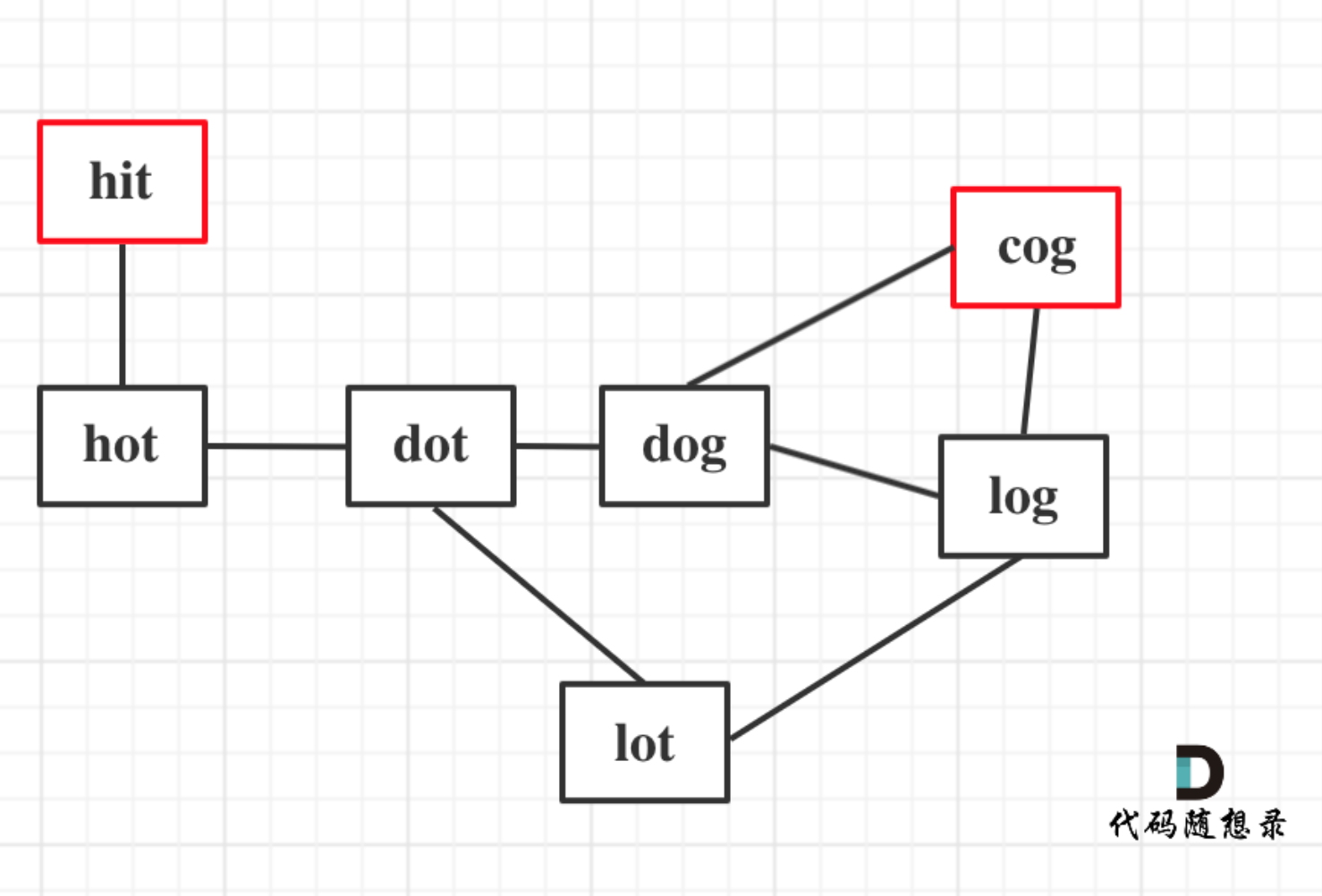
本题只需要求出最短路径的长度就可以了,不用找出路径。
所以这道题要解决两个问题:
- 图中的线是如何连在一起的
- 起点和终点的最短路径长度
首先题目中并没有给出点与点之间的连线,而是要我们自己去连,条件是字符只能差一个,所以判断点与点之间的关系,要自己判断是不是差一个字符,如果差一个字符,那就是有链接。
然后就是求起点和终点的最短路径长度,这里无向图求最短路,广搜最为合适,广搜只要搜到了终点,那么一定是最短的路径。因为广搜就是以起点中心向四周扩散的搜索。
本题如果用深搜,会比较麻烦,要在到达终点的不同路径中选则一条最短路。 而广搜只要达到终点,一定是最短路。
另外需要有一个注意点:
- 本题是一个无向图,需要用标记位,标记着节点是否走过,否则就会死循环!
- 本题给出集合是数组型的,可以转成set结构,查找更快一些
C++代码如下:(详细注释)
class Solution {
public:
    int ladderLength(string beginWord, string endWord, vector<string>& wordList) {
        // 将vector转成unordered_set,提高查询速度
        unordered_set<string> wordSet(wordList.begin(), wordList.end());
        // 如果endWord没有在wordSet出现,直接返回0
        if (wordSet.find(endWord) == wordSet.end()) return 0;
        // 记录word是否访问过
        unordered_map<string, int> visitMap; // <word, 查询到这个word路径长度>
        // 初始化队列
        queue<string> que;
        que.push(beginWord);
        // 初始化visitMap
        visitMap.insert(pair<string, int>(beginWord, 1));

        while(!que.empty()) {
            string word = que.front();
            que.pop();
            int path = visitMap[word]; // 这个word的路径长度
            for (int i = 0; i < word.size(); i++) {
                string newWord = word; // 用一个新单词替换word,因为每次置换一个字母
                for (int j = 0 ; j < 26; j++) {
                    newWord[i] = j + 'a';
                    if (newWord == endWord) return path + 1; // 找到了end,返回path+1
                    // wordSet出现了newWord,并且newWord没有被访问过
                    if (wordSet.find(newWord) != wordSet.end()
                            && visitMap.find(newWord) == visitMap.end()) {
                        // 添加访问信息
                        visitMap.insert(pair<string, int>(newWord, path + 1));
                        que.push(newWord);
                    }
                }
            }
        }
        return 0;
    }
};
当然本题也可以用双向BFS,就是从头尾两端进行搜索,大家感兴趣,可以自己去实现,这里就不再做详细讲解了。
其他语言版本
- Java
- Python
- Go
- JavaScript
- TypeScript
public int ladderLength(String beginWord, String endWord, List<String> wordList) {
    HashSet<String> wordSet = new HashSet<>(wordList); //转换为hashset 加快速度
    if (wordSet.size() == 0 || !wordSet.contains(endWord)) {  //特殊情况判断
        return 0;
    }
    Queue<String> queue = new LinkedList<>(); //bfs 队列
    queue.offer(beginWord);
    Map<String, Integer> map = new HashMap<>(); //记录单词对应路径长度
    map.put(beginWord, 1);

    while (!queue.isEmpty()) {
        String word = queue.poll(); //取出队头单词
        int path  = map.get(word); //获取到该单词的路径长度
        for (int i = 0; i < word.length(); i++) { //遍历单词的每个字符
            char[] chars = word.toCharArray(); //将单词转换为char array,方便替换
            for (char k = 'a'; k <= 'z'; k++) { //从'a' 到 'z' 遍历替换
                chars[i] = k; //替换第i个字符
                String newWord = String.valueOf(chars); //得到新的字符串
                if (newWord.equals(endWord)) {  //如果新的字符串值与endWord一致,返回当前长度+1
                    return path + 1;
                }
                if (wordSet.contains(newWord) && !map.containsKey(newWord)) { //如果新单词在set中,但是没有访问过
                    map.put(newWord, path + 1); //记录单词对应的路径长度
                    queue.offer(newWord);//加入队尾
                }
            }
        }
    }
    return 0; //未找到
}
// Java 双向BFS
class Solution {
    // 判断单词之间是否之差了一个字母
    public boolean isValid(String currentWord, String chooseWord) {
        int count = 0;
        for (int i = 0; i < currentWord.length(); i++)
            if (currentWord.charAt(i) != chooseWord.charAt(i)) ++count;
        return count == 1;
    }

    public int ladderLength(String beginWord, String endWord, List<String> wordList) {
        if (!wordList.contains(endWord)) return 0;      // 如果 endWord 不在 wordList 中,那么无法成功转换,返回 0

        // ansLeft 记录从 beginWord 开始 BFS 时能组成的单词数目
        // ansRight 记录从 endWord 开始 BFS 时能组成的单词数目
        int ansLeft = 0, ansRight = 0;

        // queueLeft 表示从 beginWord 开始 BFS 时使用的队列
        // queueRight 表示从 endWord 开始 BFS 时使用的队列
        Queue<String> queueLeft = new ArrayDeque<>(), queueRight = new ArrayDeque<>();
        queueLeft.add(beginWord);
        queueRight.add(endWord);

        // 从 beginWord 开始 BFS 时把遍历到的节点存入 hashSetLeft 中
        // 从 endWord 开始 BFS 时把遍历到的节点存入 hashSetRight 中
        Set<String> hashSetLeft = new HashSet<>(), hashSetRight = new HashSet<>();
        hashSetLeft.add(beginWord);
        hashSetRight.add(endWord);

        // 只要有一个队列为空,说明 beginWord 无法转换到 endWord
        while (!queueLeft.isEmpty() && !queueRight.isEmpty()) {
            ++ansLeft;
            int size = queueLeft.size();
            for (int i = 0; i < size; i++) {
                String currentWord = queueLeft.poll();
                // 只要 hashSetRight 中存在 currentWord,说明从 currentWord 可以转换到 endWord
                if (hashSetRight.contains(currentWord)) return ansRight + ansLeft;
                for (String chooseWord : wordList) {
                    if (hashSetLeft.contains(chooseWord) || !isValid(currentWord, chooseWord)) continue;
                    hashSetLeft.add(chooseWord);
                    queueLeft.add(chooseWord);
                }
            }
            ++ansRight;
            size = queueRight.size();
            for (int i = 0; i < size; i++) {
                String currentWord = queueRight.poll();
                // 只要 hashSetLeft 中存在 currentWord,说明从 currentWord 可以转换到 beginWord
                if (hashSetLeft.contains(currentWord)) return ansLeft + ansRight;
                for (String chooseWord : wordList) {
                    if (hashSetRight.contains(chooseWord) || !isValid(currentWord, chooseWord)) continue;
                    hashSetRight.add(chooseWord);
                    queueRight.add(chooseWord);
                }
            }
        }
        return 0;
    }
}
class Solution:
    def ladderLength(self, beginWord: str, endWord: str, wordList: List[str]) -> int:
        wordSet = set(wordList)
        if len(wordSet)== 0 or endWord not in wordSet:
            return 0
        mapping = {beginWord:1}
        queue = deque([beginWord])
        while queue:
            word = queue.popleft()
            path = mapping[word]
            for i in range(len(word)):
                word_list = list(word)
                for j in range(26):
                    word_list[i] = chr(ord('a')+j)
                    newWord = "".join(word_list)
                    if newWord == endWord:
                        return path+1
                    if newWord in wordSet and newWord not in mapping:
                        mapping[newWord] = path+1
                        queue.append(newWord)
        return 0
func ladderLength(beginWord string, endWord string, wordList []string) int {
	wordMap, que, depth := getWordMap(wordList, beginWord), []string{beginWord}, 0
	for len(que) > 0 {
		depth++
		qLen := len(que) // 单词的长度
		for i := 0; i < qLen; i++ {
			word := que[0]
			que = que[1:] // 首位单词出队
			candidates := getCandidates(word)
			for _, candidate := range candidates {
				if _, exist := wordMap[candidate]; exist { // 用生成的结果集去查询
					if candidate == endWord {
						return depth + 1
					}
					delete(wordMap, candidate) // 删除集合中的用过的结果
					que = append(que, candidate)
				}
			}
		}
	}
	return 0
}

// 获取单词Map为后续的查询增加速度
func getWordMap(wordList []string, beginWord string) map[string]int {
	wordMap := make(map[string]int)
	for i, word := range wordList {
		if _, exist := wordMap[word]; !exist {
			if word != beginWord {
				wordMap[word] = i
			}
		}
	}
	return wordMap
}

// 用26个英文字母分别替换掉各个位置的字母,生成一个结果集
func getCandidates(word string) []string {
	var res []string
	for i := 0; i < 26; i++ {
		for j := 0; j < len(word); j++ {
			if word[j] != byte(int('a')+i) {
				res = append(res, word[:j]+string(int('a')+i)+word[j+1:])
			}
		}
	}
	return res
}
var ladderLength = function(beginWord, endWord, wordList) {
    // 将wordList转成Set,提高查询速度
    const wordSet = new Set(wordList);
    // Set元素个数为0 或者 endWord没有在wordSet出现,直接返回0
    if (wordSet.size === 0 || !wordSet.has(endWord)) return 0;
    // 记录word是否访问过
    const visitMap = new Map();// <word, 查询到这个word路径长度>
    // 初始化队列
    const queue = [];
    queue.push(beginWord);
    // 初始化visitMap
    visitMap.set(beginWord, 1);

    while(queue.length !== 0){
        let word = queue.shift(); // 删除队首元素,将它的值存放在word
        let path = visitMap.get(word); // 这个word的路径长度
        for(let i = 0; i < word.length; i++){ // 遍历单词的每个字符
            for (let c = 97; c <= 122; c++) { // 对应26个字母ASCII值 从'a' 到 'z' 遍历替换
                // 拼串得到新的字符串
                let newWord = word.slice(0, i) + String.fromCharCode(c) + word.slice(i + 1);
                if(newWord === endWord) return path + 1; // 找到了end,返回path+1
                // wordSet出现了newWord,并且newWord没有被访问过
                if(wordSet.has(newWord) && !visitMap.has(newWord)) {
                    // 添加访问信息
                    visitMap.set(newWord, path + 1);
                    queue.push(newWord);
                }
            }
        }
    }
    return 0;
};
function ladderLength(
  beginWord: string,
  endWord: string,
  wordList: string[]
): number {
  const words = new Set(wordList);
  if (!words.has(endWord)) return 0;
  if (beginWord.length === 1) return 2;
  let current = new Set([beginWord]);
  let rightcurrent = new Set([endWord]);
  words.delete(endWord);
  let step = 1;
  while (current.size) {
    if (current.size > rightcurrent.size) {
      [current, rightcurrent] = [rightcurrent, current];
    }
    const temp: Set<string> = new Set();
    for (const word of current) {
      for (const right of rightcurrent) {
        if (diffonechar(word, right)) {
          return step + 1;
        }
      }
      for (const other of words) {
        if (diffonechar(other, word)) {
          temp.add(other);

          words.delete(other);
        }
      }
    }
    if (temp.size === 0) return 0;
    current = temp;
    step = step + 1;
  }
  return 0;
}

function diffonechar(word1: string, word2: string): boolean {
  let changes = 0;
  for (let i = 0; i < word1.length; i++) {
    if (word1[i] != word2[i]) changes += 1;
  }
  return changes === 1;
}